
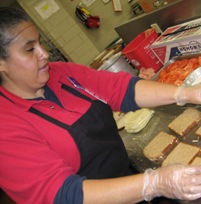
 Colleges like to talk about going green, but dining hall waste leaves some budget columns in the red. Linfield is working to change that.A lot of food that ends up on college campuses is grown, transported, prepared — and thrown out.
A tracking study at Linfield College, part of a pilot project at eight U.S. schools, has led to a dramatic reduction in kitchen food waste. Employees at participating schools reduced the amount of food going to the landfill by about one third, simply by tracking and monitoring waste before it even makes it onto the students’ trays.
“We’re not sure if our food reduction figures exactly match the other colleges in the study because we have been diligent about overproduction for a long time,” said Bill Masullo, manager of the Student Dining Services at Linfield.
“We batch-cook food, and we weigh pre-consumer trash every day to calculate the dollar amount that is wasted,” Masullo said. “If I didn’t have to pay for food that ends up in the landfill, we could not only save money, but reduce the number of trucks on the road.”
Linfield also looks at post-consumer waste. During Earth Week dining service employees put a day’s worth of trash in the middle of the dining room. When students asked, they learned that the pile of food was post-consumer waste thrown out the day before. It was a real-life lesson many took to heart.
Food has been a common theme at Linfield, with all first-year students reading In Defense of Food by Michael Pollan this fall. They help with food drives and participate in service learning activities at local farms, the food bank and a community garden. Last year students started a campus garden and several interned with local farmers.
Students and faculty with the Linfield Center for the Northwest collected oral histories of the first wine growers in Oregon, Professor Erik Schuck’s economics students conducted research on consumer behavior at the local farmers’ market, and Professor David Sumner’s English students prepared a communal dinner with local ingredients, while considering the environmental, ethical and social implications of each dish.
Other colleges in the pilot project include Pomona College in Calif., UC Davis in Calif., the University of Wisconsin in River Falls, Wis.; Coe College in Iowa; California State University of Monterey Bay in Calif.; Juniata College in Pa.; and Marist College in N.Y.
Food service provider Sodexo hopes patterns will emerge from its study that will help colleges become more sustainable. The company launched its “Stop Wasting Food” campaign in September.
(Story originally reported by news editor Josh Ensler with the student Linfield Review)