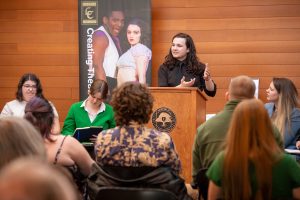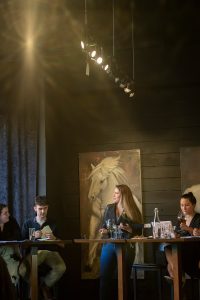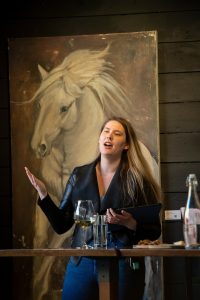
 Clíodnha McHugh set down her glass and stood up. Only weeks before, the 25-year-old apprentice lawyer had been named the best speaker in Ireland at the 64th Irish Debate Final national tournament, chaired by the Chief Justice of Ireland.
Now, she was on an all-expenses-paid tour of American universities with strong debate teams (a major perk of winning the tournament) and, for one night at least, in a Linfield University wine studies tasting room.
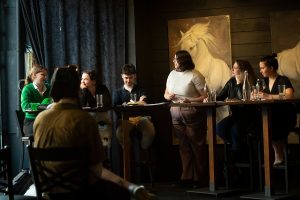
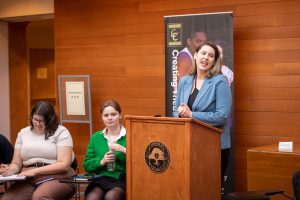
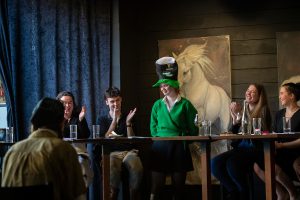
“There’s many things I look for in a drink — affordability, taste,” she began. “But there’s one thing I don’t look for, and that’s betrayal. Wine whispers to you. She’ll lure you in with pretty labels, and claims that she pairs expertly with white fish. But the reality is that wine will smile in your face — and then stab a corkscrew in your back.”
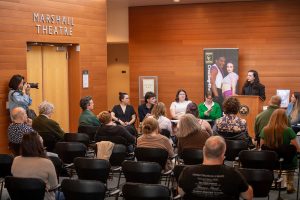
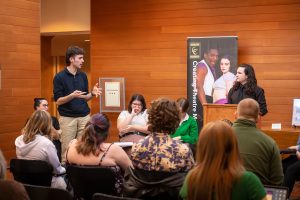
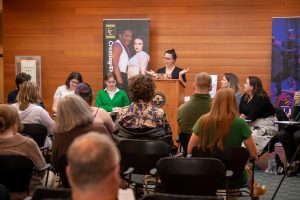
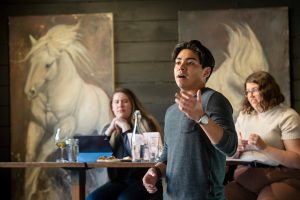
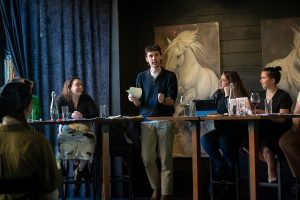
It was a bold claim to make in the heart of wine country. But her assertion was right at home in a debate that had Linfield’s storied forensics program square off against three visiting Irish national champions. The resolution: “This House prefers whiskey over wine.”
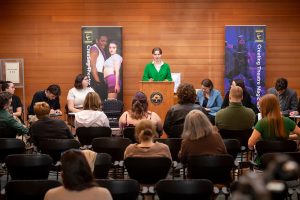
The debate was held in front of a full house at the Linfield student-run Acorn to Oak Wine Experience tasting room on Third Street, and was the second debate of the day for the Irish delegation.
They’d started their Linfield visit earlier that day with an on-campus debate. Resolution: “This House prefers a world without St. Patrick’s Day celebrations.”
Watch: “Resolution: This House prefers a world without U.S. St. Patrick’s Day Celebrations”
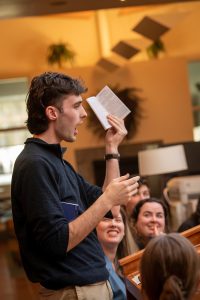
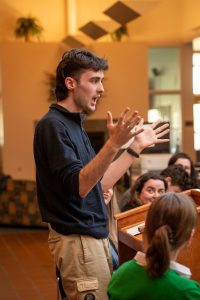
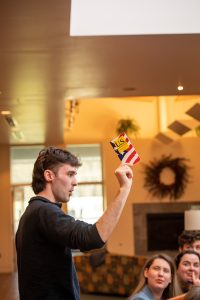
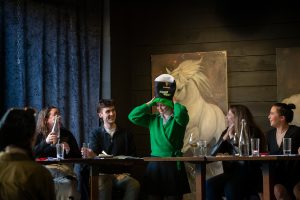
During the earlier debate, Linfield team members had partnered up with the Irish champions for an eight-person British Parliamentary-style debate that had more than a few zingers of its own.
Louise Kathleen Cullen, a law and political science student at Trinity College Dublin, opened her speech in Gaelic — one of three passions mentioned in her bio, along with “climate change and Taylor Swift.”
The very presence of St. Patrick’s Day in the United States, she said, is a painful reminder of the Irish diaspora.
“It’s a reminder of the extent to which Irish people have been spread across the world and forced off their land,” she said. “Also, by all accounts, Americans can’t handle their liquor.”
Eoin Ryan, Louise’s debate partner at Trinity College, noted that every year, the majority of the Irish cabinet has to head out around the world in mid-March.
“America currently has 11 ministers from the Irish cabinet — 11!” he said. “They should be back at home doing their actual job. I, too, would love an all-expenses paid trip to America. In fact, I am on one, and it’s great. But I think instead of them entertaining Joe Biden, they should be entertaining the very real issues facing Ireland back at home.”
Linfield’s Clara Johansen ’25 said the debate was a perfect way to kick off the weekend.
“My partner and I were bounding ideas off each other really well for having met each other two minutes before,” she said. “There are some aspects of it that are universal; we could talk about how we structure arguments.”
Afterward, the Irish debaters relaxed ahead of the evening’s whiskey vs. wine debate, and reflected on the differences between McMinnville and Nashville, which had been their previous stop.
“A lot less cowboy hats,” Eoin said.
“A lot more pride stickers,” Clíodhna added.
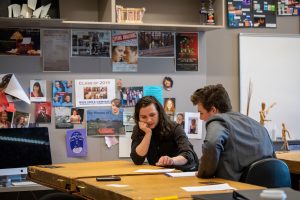
It wasn’t a coincidence Linfield University was the second stop on their tour. Though not as often discussed, Linfield’s history of excellence in collegiate debate precedes its storied athletic traditions. Linfield’s chapter of Pi Kappa Delta, the forensics honorary, is Oregon’s alpha chapter; it celebrated its 100-year anniversary earlier in March with pizza and, of course, speeches.
“We started doing this at a time when other colleges and universities in Oregon were not even founded yet,” said Jackson Miller, the director of Linfield Forensics and a professor of communication arts.
You can still see that legacy on campus — Mahaffey Hall is named after Roy D. ‘Hap’ Mahaffey, a professor and legendary forensics coach. The tournament that bears his name is one of the oldest in the country, now in its 94th year.
“There are these wild stories of Mahaffey and his team taking train trips to the east coast,” Jackson said. “At least we can fly now!”
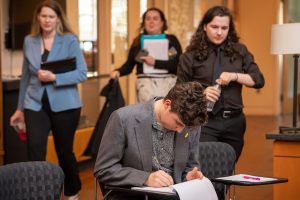
The time commitment is significant: Linfield Forensics generally participates in eight to ten tournaments per year, most of which are at least two days long. The season begins in mid-October at the Steven Hunt Classic in Portland and ends in early March with the Pi Kappa Delta national tournament, which was held in Phoenix, Arizona, this year.
Clara said people often assume speech and debate is all about politics and current events, but really, it’s about passion.
“You can bring up any topic you want in a speech and present it because you care about it,” she said. “It is a good way to get more informed about current events, but it’s also a way to get comfortable talking about the things you’re passionate about. It’s a good skill for anyone to have.”
Jackson said forensics is at the heart of a comprehensive education.
“It’s about something that I think college education should fundamentally be about: finding your voice and learning the skills you need to persuade a variety of different audiences in whatever profession you pursue,” Miller said.