
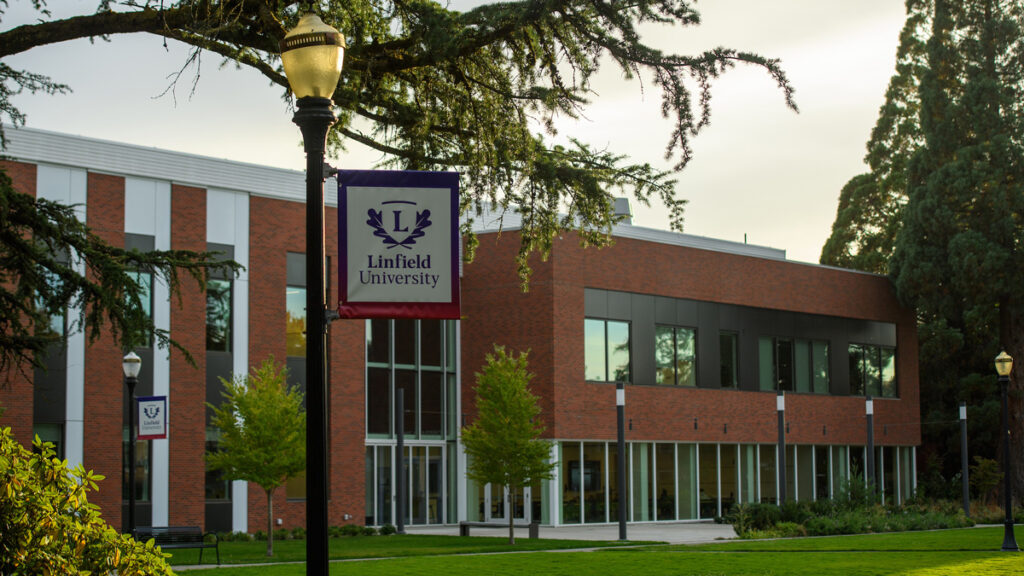
Change strengthens transfer pathways and supports on-time graduation
Linfield University has approved a revision to its undergraduate degree requirements, reducing the total credits needed to earn a bachelor’s degree from 125 to 120. The update brings Linfield in line with many peer institutions and is designed to remove barriers that can delay graduation and increase costs for students and families.
The change also adjusts class-standing thresholds to better reflect students’ academic progress, including those transferring from other institutions.
“This change reflects our commitment to providing a high quality education with a clear and efficient path to graduation,” said Beth Concepción, provost and vice president for academic affairs. “Our goal is to help students stay on track, graduate on time and move confidently into their careers or graduate studies.”
Under the previous 125-credit model, students needed to average nearly 16 credits per semester to complete their degrees in eight semesters. Because many first-year students begin with 13–14 credits — often due to course structures and advising recommendations — some unintentionally fell behind the pace required to graduate in four years. That could result in an additional semester, increasing both time and cost.
By shifting to a 120-credit minimum, Linfield reduces the likelihood that students will need an extra term to meet graduation requirements, while maintaining the academic depth and quality of its programs.
Stronger transfer pathways and financial aid alignment
The credit requirement change builds on Linfield’s transfer-friendly policies, including its block transfer approach for students who complete associate degrees designed for transfer. Under this policy, students who earn degrees such as Oregon’s Associate of Arts Oregon Transfer (AAOT) or Washington’s Direct Transfer Agreement (DTA) will enter Linfield with junior standing under the updated credit thresholds.
Recognizing transfer students at junior standing not only reflects the work they have already completed but can also increase eligibility for federal financial aid. Together, Linfield’s block transfer policy and the 120-credit requirement create a more seamless, affordable pathway to completing a bachelor’s degree.
“As one of Oregon’s most transfer-friendly private universities, Linfield is committed to maximizing previously earned credits and ensuring a seamless transition for transfer students,” Concepción said.
Reducing excess credits while ensuring academic excellence
The 120-credit requirement applies only to the total minimum needed for graduation and to revised class-standing benchmarks. Requirements for majors, minors, Linfield Curriculum courses and residency remain unchanged. Policies governing transfer credits, internships, experiential learning and other academic components also remain in place.
Data from recent graduating classes show that Linfield students often complete more than the minimum required credits. From 2018–19 through 2024–25, the median number of credits earned at graduation was 129, with approximately one-quarter of students completing the equivalent of an additional semester or more. University leaders believe the new 120-credit requirement will help reduce excess credits while continuing to ensure academic excellence and strong student outcomes.
The updated policy takes effect beginning in fall 2026.
For prospective students and families, the change reinforces Linfield’s commitment to delivering a high-quality, personalized education that supports timely graduation and a strong return on investment.
For more information about undergraduate programs at Linfield University, visit linfield.edu.