
Enrollment at Linfield University has stabilized this fall, with 1,733 students enrolled across its McMinnville, Portland and online programs. Growth in key areas reflects student interest in high-demand, career-focused fields, as well as Linfield’s strong sense of community — both in and out of the classroom.
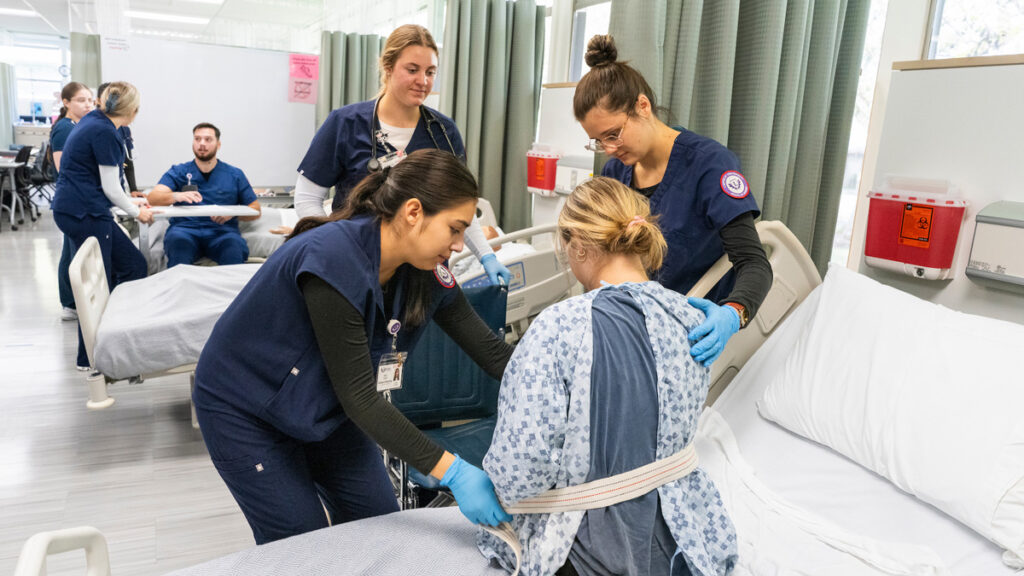
Among the most significant drivers of growth are Linfield’s Master’s Entry into Professional Nursing (MEPN) program — the only program of its kind in Oregon — and online graduate endorsements in education, designed for working teachers seeking to advance their credentials.
Participation in athletics also remains a defining feature of Linfield’s student experience. This fall, 57% of first-time, first-year students plan to be involved in intercollegiate athletics, contributing to the university’s vibrant campus life and tradition of competitive excellence.
Linfield’s new LEAD Honors Program also exceeded expectations, enrolling enough students to fill three cohorts in its inaugural year. The program offers academically talented students expanded opportunities for leadership, research and community engagement, as well as scholarships.
“Students are drawn to Linfield because our programs are designed around where the world of work — and the world of ideas — is heading,” President Mark Blegen said. “Whether they’re future nurses, teachers or student-athletes, Linfield students see a clear connection between their studies, their passions and their goals.”
Linfield’s role in serving the region remains strong: 68% of undergraduate students are from Oregon, underscoring the university’s deep roots and continuing commitment to the state’s workforce and communities.
The undergraduate population reflects Linfield’s student-centered mission:
- An 85.5% retention rate for first-time, first-year students. This is a 10-year high percentage for the university.
- 42.9% are first-generation college students.
- 15.9% began as transfer students.
- More than one-third are Pell Grant recipients.
- 42.1% are U.S. students of color.
- The average undergraduate age is 22, with students ranging in age from 17 to 64.
Linfield’s commitment to serving today’s diverse college-going population was recognized earlier this year in the Carnegie Classification of Institutions of Higher Education. The university was named an “Opportunity College and University,” a national honor that highlights institutions creating real outcomes for students from a wide range of backgrounds. At Linfield, 70.2% of undergraduates are part of the “new majority” — students whose parents did not achieve a college degree, U.S. students of color, Pell Grant recipients or those who began as transfer students. The new classification recognizes just 16% of U.S. colleges and universities, and Linfield is one of the few private universities in the Pacific Northwest—and the only Oregon university of its kind—to earn the “higher access, higher earnings” distinction.
Linfield was also named the Best Value College in Oregon by Niche.com and as the top liberal arts institution in Oregon for social mobility by U.S. News & World Report.
“Behind every ranking, every statistic, are students who are finding their place and thriving,” Blegen said. “That’s what we’re most proud of here at Linfield.”